

Educational information only, not a diagnosis. Know when to get help.
A one-page summary of published guidance for primary care clinicians, residents and coders. For patient-facing detail see the rest of the site.
Coding
ICD-10-CM R36.1 Hematospermia (billable; male-specific) [ICD-10-CM]. Synonyms: hemospermia. Code the underlying cause instead when one is established (for example prostatitis or a sexually transmitted infection), following official guidelines [CMS].
Initial assessment
- Exclude pseudo-hematospermia (hematuria, partner bleeding) [RACGP] [MSD].
- History: duration, recurrence, procedures (biopsy, TURP, vasectomy), sexual and travel history, anticoagulants, bleeding history, LUTS, constitutional symptoms, family history of prostate cancer [AAFP] [RACGP].
- Exam: BP, genitalia/testes, DRE [review].
- Tests: urinalysis ± culture; STI NAAT (first-void urine) if indicated; PSA if ≥40 years, abnormal DRE or risk factors; consider FBC/coagulation if persistent [RACGP].
Who to refer
NICE CKS: refer men over 40 with no cause found in primary care; any age with recurrent/persistent hematospermia, persistence despite treatment, suspected cysts/calculi, or features suggesting malignancy (suspected-cancer pathway) [NICE CKS]. RACGP lists concurrent hematuria and abnormal PSA or DRE as referral indications [RACGP].
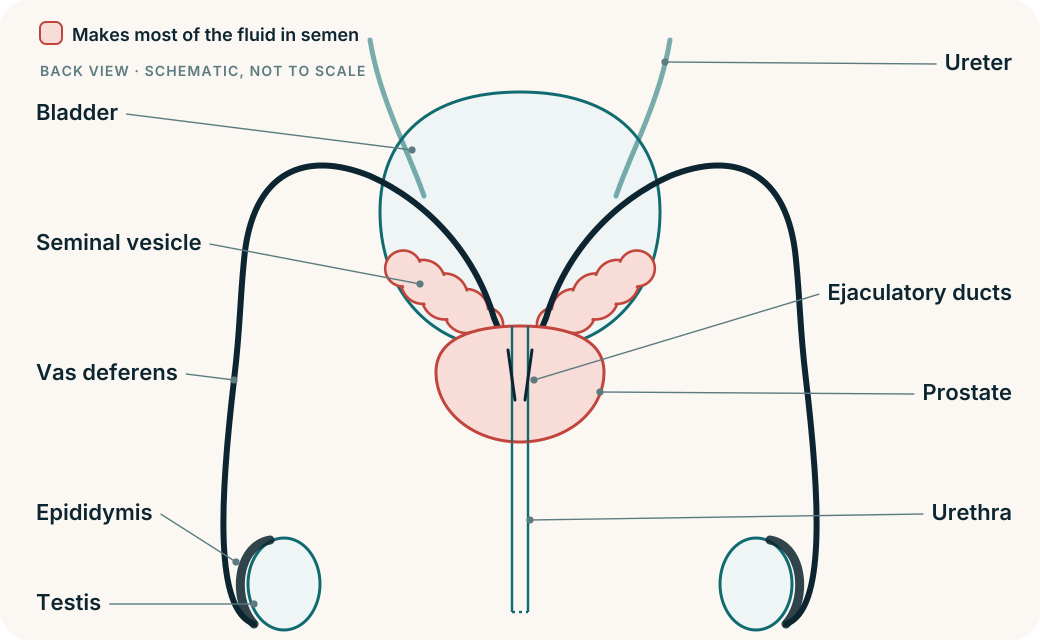
Specialist workup
TRUS, MRI, cystoscopy, scrotal ultrasound as indicated [AAFP] [MSD].
Management
Reassurance for self-limited cases with a negative workup; treat identified causes. Empiric antibiotics for presumed prostatitis are used by some but considered controversial [review]. Post-procedural hematospermia should resolve within about 3–4 weeks [NICE CKS].
Sources
- ICD-10-CM R36.1 Hematospermia ICD10Data.com (FY2026/2027 code set; verify against CMS/CDC files)
- ICD-10 codes Centers for Medicare & Medicaid Services
- Haematospermia Australian Family Physician (RACGP), Dec 2015
- Hematospermia MSD Manual Professional Edition
- Evaluation and Treatment of Hematospermia American Family Physician, 2009;80(12):1421-1427
- Hematospermia: etiology, diagnosis, and treatment Review article, PubMed Central (PMC5904639)
- Haematospermia: management NICE Clinical Knowledge Summaries
- Laboratory and clinical management of leukocytospermia and hematospermia: a review PubMed Central (PMC7290265)
We link to primary medical sources so you can check our work. See the editorial policy and the full reference list.